
Oneida to Sabine Lake Virtual Open House
Welcome to the Oneida to Sabine Lake Virtual Open House
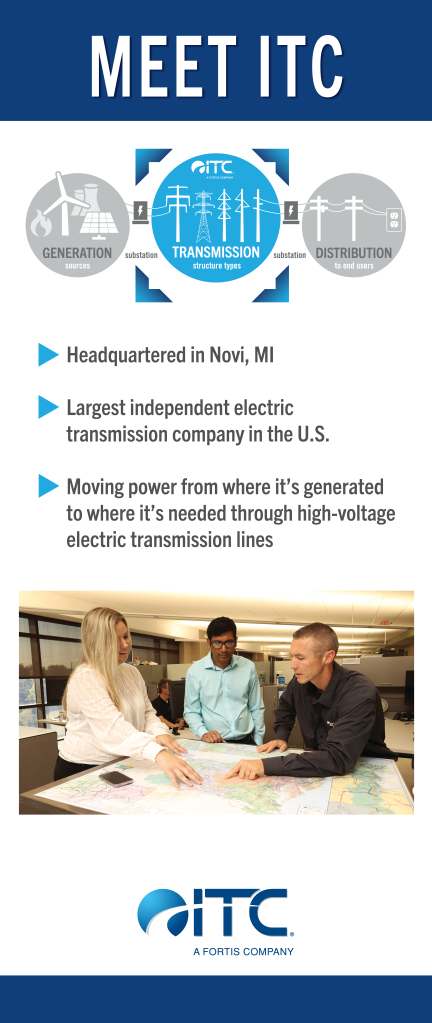
Meet ITC
ITC is a vital part of the electrical power system. Headquartered in Michigan, ITC builds, operates, and maintains the system of high-voltage power lines and substations that transport electricity from power generation sources to local distribution networks and, ultimately, to consumers. Essentially, ITC moves electricity from where it’s made, to where it’s needed. ITC does not own any power plants or generation facilities, but constantly responds to changes in our state as demand for power changes. METC and ITCT are wholly owned subsidiaries of ITC.
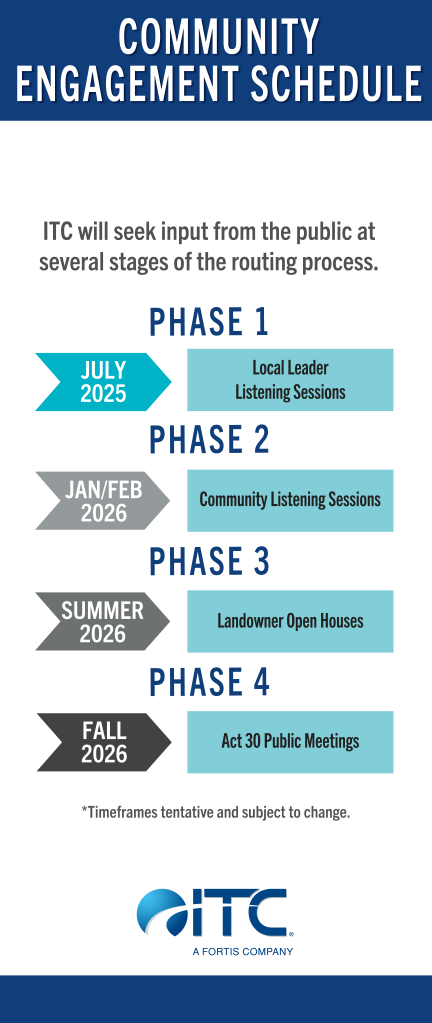
Community Engagement Schedule
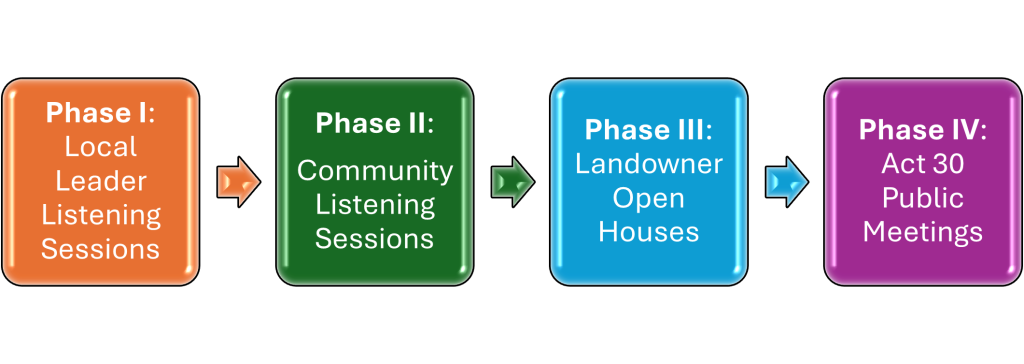
Public and Community Engagement is a critical part of siting a transmission line in Michigan. This process is led by ITC’s Local Government and Community Affairs (“LGCA”) team. The goal is to provide information to local officials, community leaders, landowners, and other members of the public about the Projects, while also soliciting and receiving feedback from those individuals about the Projects’ impacts on their communities. For Tranche 2.1, ITC has planned additional engagement opportunities to obtain robust community feedback.
For Tranche 2.1, ITC’s Public and Community Engagement will include four phases:
About the Project
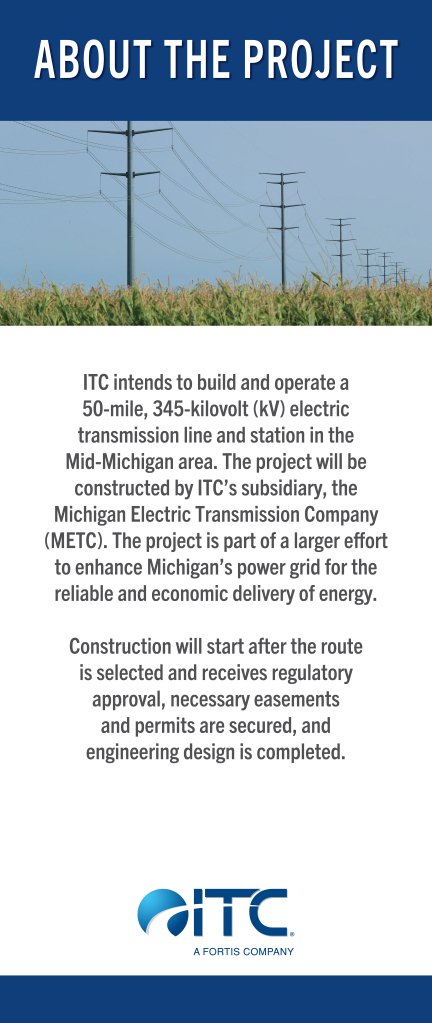
For the Oneida to Sabine Lake transmission project, ITC will:
- Build a 50-mile, 345 kV line from Oneida station to Sabine Lake station
- Build a 345 kV station in Livingston County (Sabine Lake)
Environmental
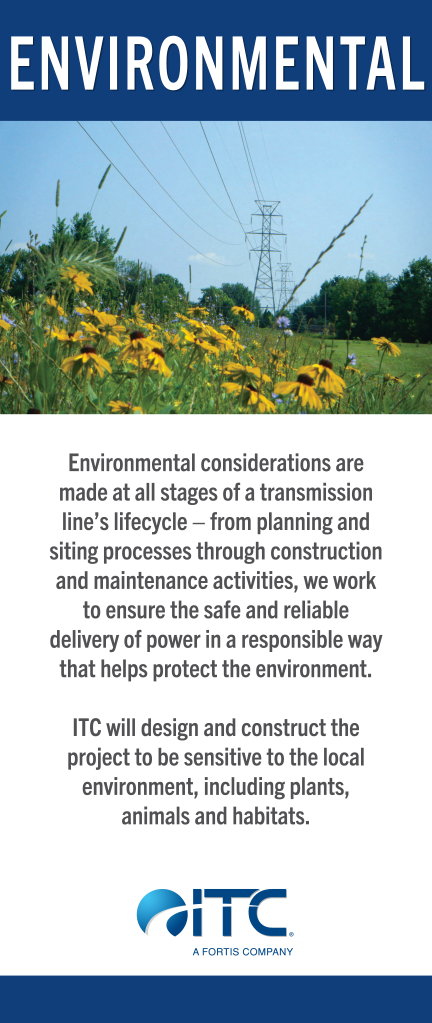
Environmental responsibility is one of ITC’s core values and it is reflected by our employees, at our facilities and in our operations. Environmental considerations are made at all stages of a transmission line’s lifecycle – from planning and siting processes through construction and maintenance activities, we work to ensure the safe and reliable delivery of power in a responsible way that helps protect the environment.
By considering and addressing potential impacts proactively, an ITC transmission project can lead to a cleaner, more resilient, and environmentally conscious energy landscape.
- Renewable Energy Integration: Transmission lines facilitate the integration of renewable energy sources, such as wind and solar, promoting cleaner and greener energy options.
- Enhanced Biodiversity: Through thoughtful planning and habitat restoration efforts, LRTP can lead to the creation of new ecological corridors, fostering the growth of diverse and native plant and animal species.
- Sustainable Land Use: By adhering to environmentally responsible practices and minimizing land disturbance, LRTP can promote sustainable land use and preserve valuable natural resources.
- Erosion Control: The project will include measures to mitigate soil erosion, protecting nearby water bodies, and supporting a healthier ecosystem.
Easement
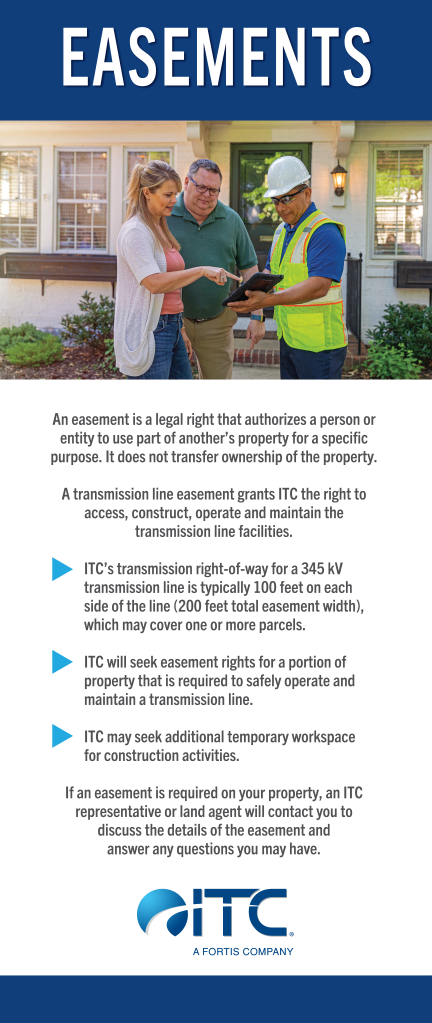
Construction of the Tranche 2.1 Projects requires ITC to obtain easements from private landowners. Land acquisition efforts and discussions with landowners may coincide with the Act 30 proceeding, but will not be completed until after the Commission approves an Act 30 certificate.
- An easement is a legal right that allows someone to use another person’s property for a specific purpose. Here, ITC will seek an easement to construct, operate, and maintain an electric transmission line.
- Landowners retain ownership of the easement area and all rights not conveyed to ITC for its use and which do not interfere with that use.
- The easement restricts the placement of buildings and structures within the easement area to ensure safety and reliability and provides rights for the clearing and removal of vegetation.
Routing/Design
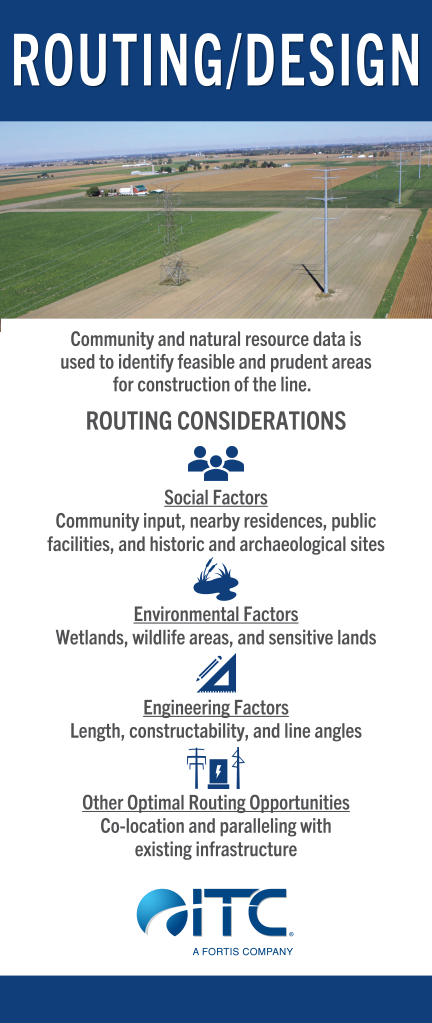
ITC hires third party routing consultants to assist with route selection and prepare a route study. The route selection process generally involves comparing potential routing options. There are many factors examined when routing a transmission line. They include engineering, social, and environmental factors. These can include criteria such as length, line angles, nearby residences or public facilities, wetland areas, historical and archaeological sites, and cropland/center pivot irrigation presence.
ITC is committed to securing a route that meets the project needs while minimizing the amount of human and environmental impact.

GIS/Mapping
The Oneida to Sabine Lake project map is available here.
Construction
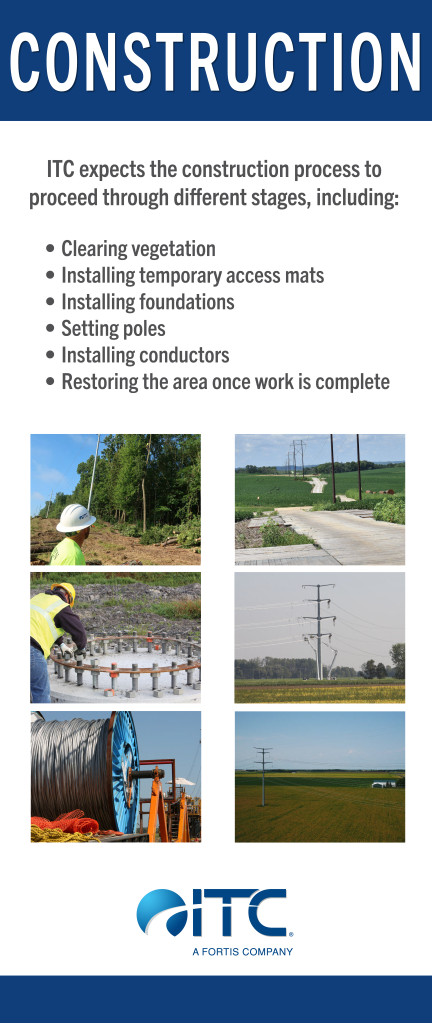
- Clearing and Grading
- The construction phase begins with clearing the approved route of vegetation and obstructions.
- Where necessary, grading may be required to provide an access path.
- ITC takes care to minimize the impact on the natural environment during this process and restores any disturbed areas after construction to the extent practicable.
2. Foundation and Structure Installation
- Skilled construction crews begin by installing the foundations for the transmission structures. These foundations provide a stable base to support the weight and tension of the transmission lines.
- ITC uses advanced engineering techniques to ensure that the structures are appropriately positioned and anchored securely to withstand weather events and loads.
3. Transmission Line Construction
- Transmission structures are carefully constructed along the approved routes.
- Expert teams handle the installation, ensuring precise alignment and safe construction practices.
- The transmission line’s height is carefully determined to avoid potential obstacles and maintain safe clearances. The height of each transmission structure for 345 kV lines will be approximately between 125 ft – 180 ft.
4. Conductors and Insulators
- High-quality conductors, chosen for their efficiency in transmitting electricity and durability, are strung between the transmission structures.
- Insulators are installed to prevent electricity from grounding through the structures and to maintain safe electrical isolation.
Sabine Lake Substation
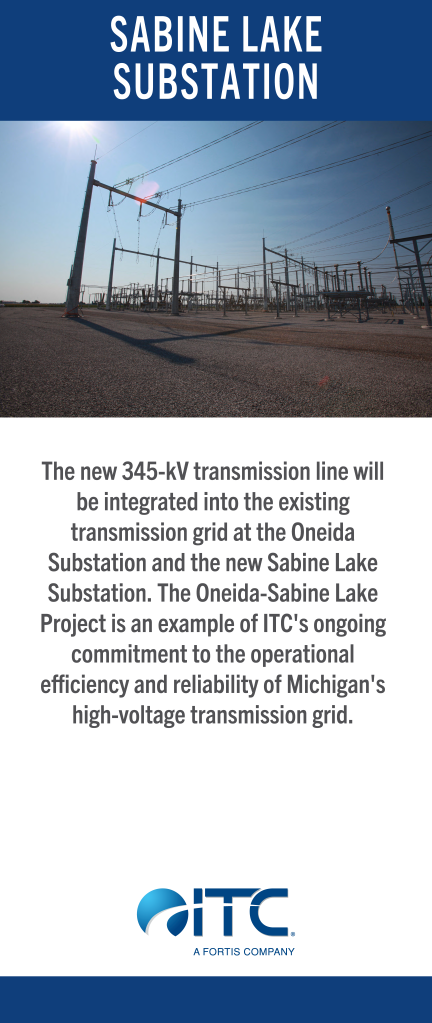
- When a new substation is planned for, construction can begin on the substation once engineering plans, permits and equipment are in place. This involves site preparation, foundation construction, and equipment installation.
- The substation undergoes comprehensive testing to ensure that all systems are functioning correctly and safely. Once the testing is successful, the substation is commissioned and integrated into the power grid.
- The substation requires ongoing monitoring, maintenance, and management to ensure reliable electricity transmission.
Input Station
Click here to contact us.